OVD and the path to interoperability
Standardized voyage data is foundational for scalable AI. Frameworks like OVD reduce ambiguity, improve interoperability, and create the conditions for reliable analytics, benchmarking, and automation. But achieving standards requires something maritime has historically resisted: transparency.
As maritime organizations adopt more digital tools, interoperability becomes critical. Without shared standards, systems cannot easily exchange or interpret data. Each integration becomes a custom project. Each vendor relationship requires bespoke data mapping. And the promise of analytics across fleets, portfolios, or the industry remains unrealized.
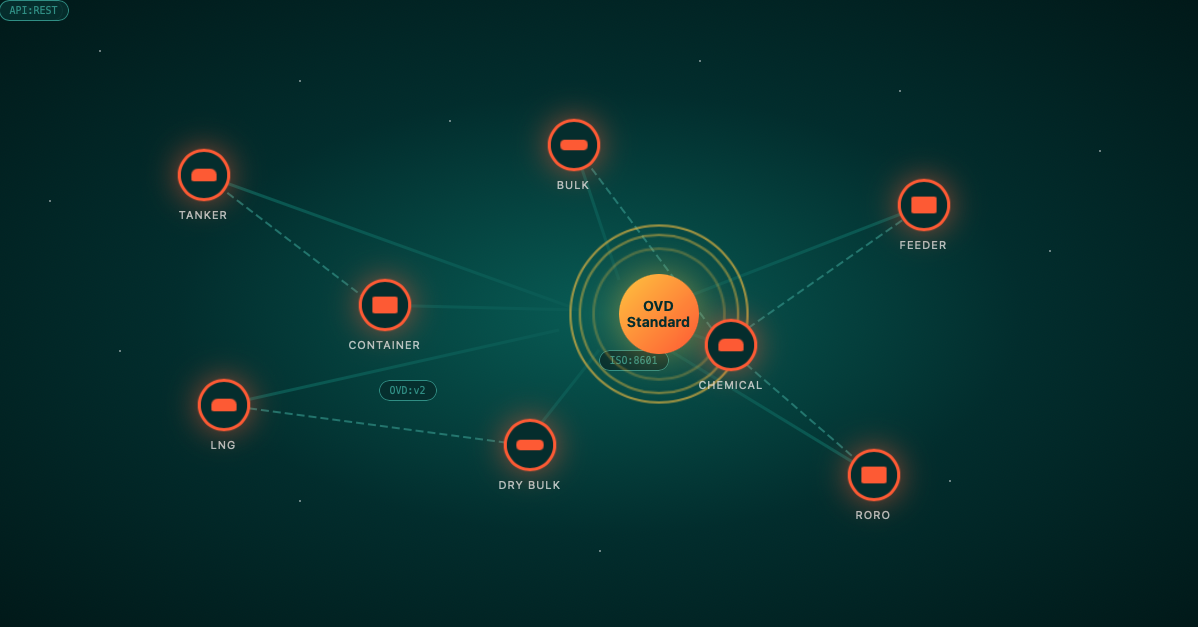
This is why data standards like the Operational Vessel Data (OVD) specification matter. They address inconsistent voyage reporting by defining common structures and terminology. When everyone uses the same language, systems can talk to each other without translation.
The Transparency Problem
But technical standards are only part of the challenge. The deeper issue is cultural: maritime has traditionally been reluctant to share data, and that reluctance limits what standards can achieve.
"I see issues with the transparency in the shipping industry. There's still a little bit of secrecy. You tend to keep your own data. You don't want to share it with the customers because you might get claims or whatever."
— Nils Israelsson, Head of Operations, Stena Bulk
This instinct is understandable. Data can reveal performance gaps. It can expose inefficiencies that become negotiating points in commercial relationships. It can create liability where none existed before. These are legitimate concerns.
But they are also self-limiting. Organizations that hoard data protect themselves from scrutiny at the cost of isolating themselves from improvement.
The Case for Sharing
The argument for greater transparency is not that data should flow freely without controls. It is that the current default—share as little as possible—prevents the industry from capturing collective benefits.
"If you work together in this kind of way where everyone is sitting on his own data, you'll never improve yourself—not as a company and not as an industry. You need to find a way together in the industry to share the data, lowering costs and lowering emissions and making sure that you have a good future together."
— Felix Jan van Den Bos, Independent Digital Transformation Consultant
Benchmarking requires comparison. AI models improve with more training data. Efficiency gains often come from patterns visible only at scale. None of this is possible when each organization operates as a data island.
Standards as Enablers
This is where standards play a crucial role. They create the technical infrastructure for data sharing without requiring organizations to expose everything. Standards define what gets shared and in what format, allowing participants to contribute to common datasets while maintaining control over proprietary information.
For AI specifically, standardization enables more reliable analytics, cleaner integrations, and stronger model performance. When voyage data follows consistent structures, algorithms can be trained once and applied broadly rather than customized for each data source.
Standardization is not restrictive—it is an enabler of innovation at scale. Organizations that adopt common data frameworks position themselves to benefit from tools built on those frameworks, including tools that do not exist yet.
The Path Forward
Achieving industry-wide standards will take time. It requires coordination among competitors, alignment across technology vendors, and trust that has not historically characterized maritime relationships.
But the direction is clear. Organizations that embrace standardization—that treat interoperability as a feature rather than a threat—will be better positioned to capture the benefits of AI and analytics. Those that resist will find themselves increasingly isolated, unable to participate in the data-driven improvements reshaping the industry.
This series is based on a webinar from Digital Ship. Watch the video here