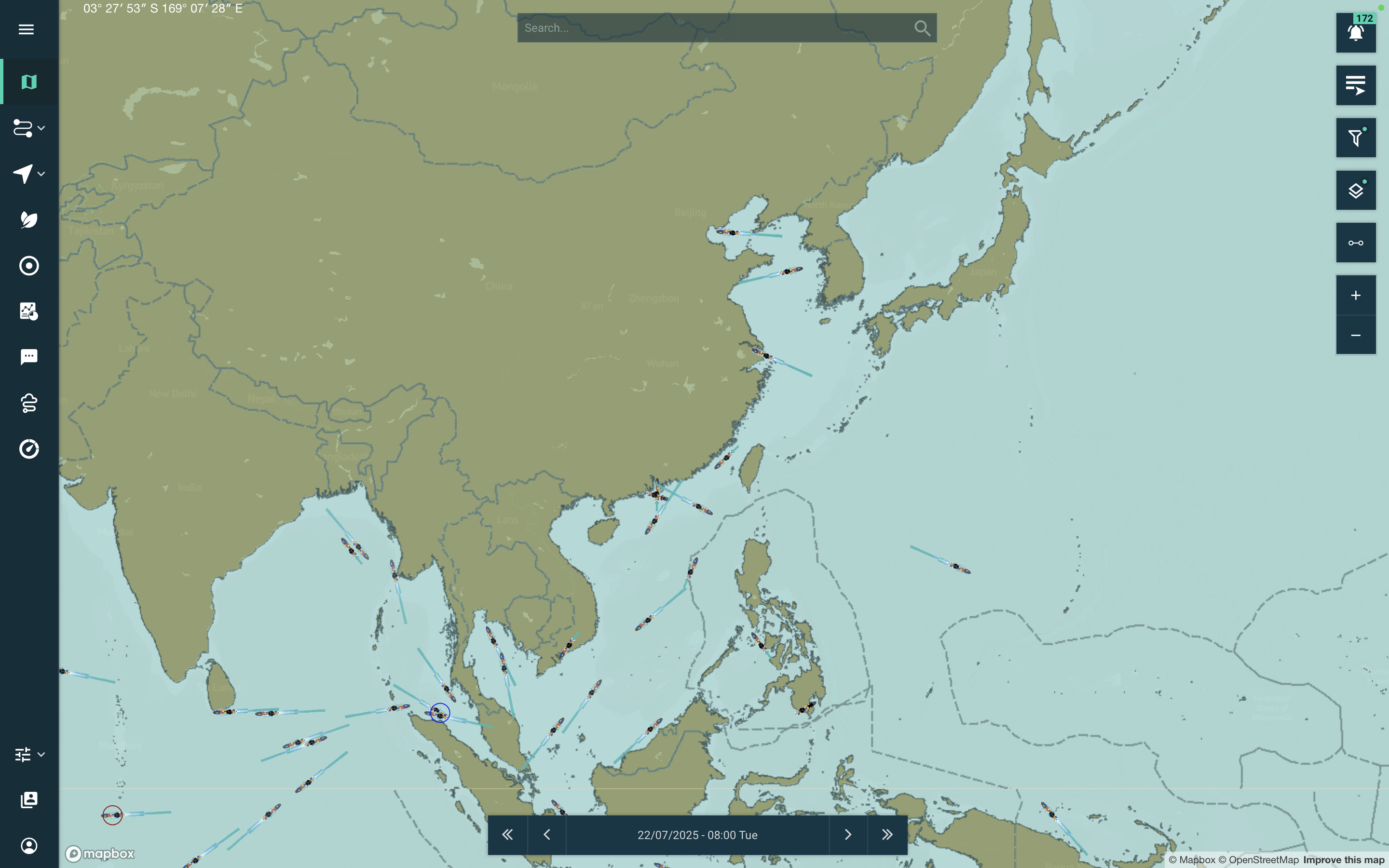
From experimentation to practical application.
2025 marked a shift from AI experimentation to practical application in maritime. Mature models, regulatory pressure, and clearer operational priorities mean AI is no longer theoretical—it is becoming a necessary operational tool. But the real change is not in the technology. It is in how operators are approaching it.
The maritime industry has never lacked complexity. What has changed is the scale, speed, and interconnectedness of the decisions operators are now expected to make every day. Fuel costs remain volatile. Environmental regulations continue to expand in scope and enforcement. Commercial margins are under constant pressure. At the same time, vessels are producing more data than ever before.
Against this backdrop, 2025 will represent a genuine turning point for artificial intelligence in maritime.
For years, AI in shipping was discussed more than it was deployed. Many initiatives stalled under the weight of fragmented data, unclear objectives, or technology that promised more than it could deliver. Today, that landscape is shifting.
"The good thing about AI is that AI doesn't require any structured data. Unstructured data is good enough, so we don't have to go through this long project that requires data warehousing or big data models. There's an opportunity there."
— Alexandre Lapointe, Chief Product Officer, OrbitMI
This is a significant change. Previous generations of analytics and optimization tools demanded pristine, structured datasets before they could deliver value. Modern AI models can work with text-based reports, incomplete records, and the kind of messy operational data that shipping actually produces. This lowers the barrier to entry for an industry that still relies heavily on manual processes.
The Shift from 'Can We?' to 'Should We?'
One of the clearest signs that 2025 is different is the nature of the conversations happening inside shipping organizations. The question is no longer whether AI is relevant. Operators are now asking where it can create real operational value—and equally important, where it cannot.
"I get phone calls from senior leaders saying, we want to engage with AI, we want to do AI, and the immediate next question is, well, to do what? And the answer is usually, we're not quite sure. We just want to do something."
— Nick Chubb, Strategy Director, Thetius
This pattern—wanting to act without clarity on what to act on—is exactly what separates productive AI initiatives from expensive experiments. The organizations making progress in 2025 are those that have moved past the fear of missing out and started with specific operational problems.
Regulatory Pressure as an Accelerant
At the same time, regulatory pressure is accelerating adoption whether organizations are ready or not. Emissions monitoring, carbon intensity metrics, and reporting requirements demand higher data accuracy and faster response times. Manual workflows and disconnected tools are increasingly untenable.
The combination of capable technology and regulatory urgency creates conditions where AI adoption becomes less of a strategic choice and more of an operational necessity. Organizations that have invested in digital foundations over the past several years are now positioned to capture value. Those that have not face a widening gap.
"There's an opportunity now for maritime to catch up the tech or digital revolution. Probably in maritime we're late, but I think there's an opportunity to catch up now with AI."
— Alexandre Lapointe, Chief Product Officer, OrbitMI
What Has Actually Changed
2025 is not the year AI suddenly solves every problem in maritime. It is the year AI becomes practical, measurable, and integrated into everyday operations. The technology has matured. The use cases have become clearer. And operators have developed the organizational muscles—and the healthy skepticism—needed to separate genuine opportunity from vendor hype.
The posts that follow in this series explore what that looks like in practice: how to identify the right problems, how to work with imperfect data, when to build versus buy, and how emerging interfaces are changing the relationship between users and software. Each draws on real experience from operators and technologists working at the frontier of maritime AI.
This series is based on a webinar from Digital Ship. Watch the video here




.png)